
Choke Research & Development Directorate officially hosted an international hybrid symposium this week at Debre Markos University. The symposium brought global experts together to address the escalating environmental threats facing the Choke agroecosystem which is one of the country’s most vital natural landmarks.
The symposium with theme “Climate Change Adaptation and Resilience in Mountain Ecosystems” served as a critical platform for analyzing the intensifying impacts of global warming on the Choke Mountain and its surroundings.
In his welcoming address, Dr. Melkamu Bezabih, Vice President for Research and Technology Transfer at DMU, asserted that “Choke” is far more than a brand for the institution; it is a strategic cornerstone. He detailed the university’s multi-pronged approach to the region, which includes Scientific Research, Academic Excellence, Knowledge Exchange and Economic Support: The establishment of Choke-related enterprises to bolster local livelihoods.
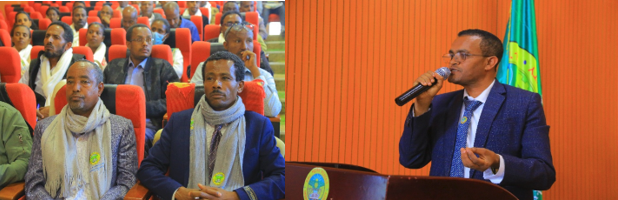
Dr. Melkamu emphasized that these initiatives reflect a deep-seated institutional commitment to integrating scientific rigor with regional development.
Opening the symposium, Dr. Yiheyis Aregu, Academic Vice President, framed the environmental crisis in moral terms. As he remarked at the event, “The world we live in is not only an inheritance from our fathers but also a trust we have received from our children,” By his speech, he also urged participants to treat the Choke ecosystem as a guarantee for life that demands immediate and focused intervention.
Following the opening, Dr. Amare Tesfaw, Director of the Choke Research and Development Center, presented a comprehensive roadmap detailing major activities within the sector, completed projects and identifying high-priority areas for future intervention.
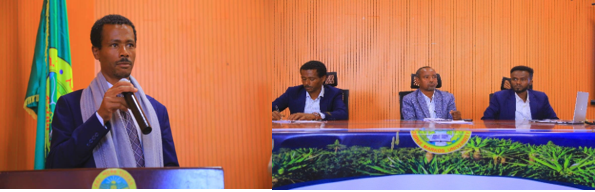
The event featured a distinguished panel of scholars, including Professor Belay Simane (AAU), Dr. Abraham Abiyu (Uganda), Professor Satish Kumar (AAU) joining virtually and Dr. Sintayehu Musie (DMU).
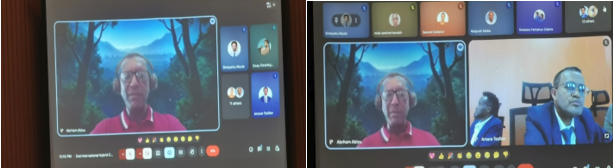
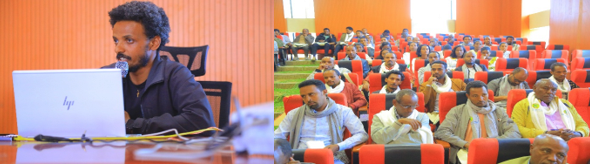
The symposium’s discussions and keynote addresses focused on five critical pillars:
- The vulnerability of high-altitude ecosystems to global climate shifts
- Advanced natural resource conservation and water source management
- The protection of unique Afro-alpine biodiversity
- Enhancing the resilience of local communities against environmental shocks
- Strengthening international partnerships for sustainable conservation
The experts reached a consensus that mitigating climate impacts on the Choke Mountains requires a “Multidimensional & Collaborative” approach. This involves blending cutting-edge scientific research with the indigenous knowledge held by local communities. Scholars warned that without integrated efforts, the natural resources of these mountain ecosystems may not survive for future generations.
Participants praised the symposium for providing evidence-based inputs for policymakers and fostering collaboration between international research institutions. Closing the event, Dr. Melkamu Bezabih expressed his gratitude to the contributors and reaffirmed DMU’s mission. He pledged that the university would continue to look beyond the classroom, executing practical, collaborative activities within the Choke agroecosystem to ensure its long-term survival.